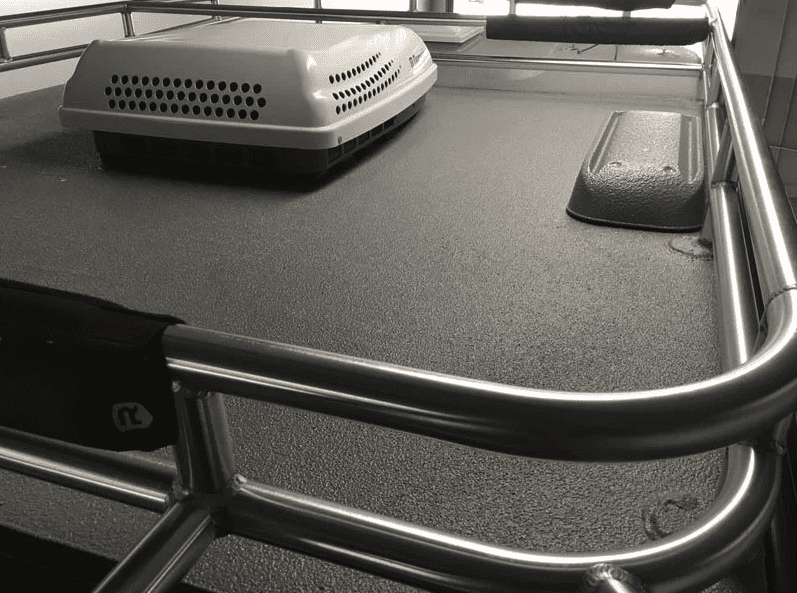
The elements cause a lot of stress on the RV roofs. The main factors that lead to the degradation of materials are sun rays, temperature fluctuations, and road shocks. The cracks, leaks, and other deteriorations make people think about the need for repair or even replacement. Not all roofing materials are the same and this has a direct impact on the life, care and protection of the structure. Classical materials such as rubber and fiberglass have been used in the industry for many years, but new coatings such as polyurea are much stronger and more effective.
This paper aims to discuss the causes of damage to RV roofs, the types of damage and the prevention measures that can be taken. An RV roof is a barrier that protects all the vehicle’s components, including the interior, from water and other pollutants. If the roof has cracks or weak areas, water will get in and cause rot, mildew, and insulation failure. A small leak can be devastating if it is not addressed before it becomes a big problem since it weakens the roof’s structure. This is so as to prevent costly repairs that may be incurred as a result of damages that have occurred in the interior compartment.
Some owners try to solve the problem quickly, using sealants or patchwork kits, but such solutions are unreliable when it comes to long-term use. It is important to know what type of material is available and what they can withstand in order to carry out the right repair or replacement.
Rubber Roofing: Flexibility and Maintenance
The least expensive rubber based EPDM and TPO roofing systems are quite flexible. EPDM is a kind of synthetic rubber that is stretched across the roof and is resistant to minor impacts. TPO is a stronger and more rigid material based on thermoplastic which reflects sunlight to keep the internal temperature low. Both of the materials are lighter than other materials which is an advantage in terms of fuel economy.
Nevertheless, the rubber roof needs care. It cracks, shrinks and separates at the seams over time. It leaks when it is exposed to the sun. There are glues that can prolong the life of the product, but it still needs to be checked regularly. Most RV owners replace the rubber roofs because of the wear and tear.
Fiberglass Roofing: Strength with Limitations
Fiberglass is better than rubber because it is more durable. It is more resistant to punctures and dents than flexible membranes. Some manufacturers form the fiberglass roofs in one piece which reduces the number of seams and possible leaks. One difference between rubber and fiberglass is that the latter does not stretch or shrink with changes in temperature.
However, there is a drawback to fiberglass roofing. It develops stress fractures in conditions of severe weather changes, particularly when used in cold climates. The repair can be quite intricate and may require certain products. When cracks occur, water gets in, and sometimes, the entire roof has to be replaced instead of just repairing the damage.
Polyurea Coatings: Seamless, Long-Lasting Protection
Polyurea has emerged as the best option for protecting the RV roof. The difference between rubber and fiberglass is that polyurea is applied in a seamlessness and adheres to the surface by being sprayed on. This removes the most common failure points in traditional roofing.
When applied, polyurea is not prone to cracking, impact or UV degradation. It is flexible enough that it can expand and contract without suffering any adverse effects. The rubber does not degrade over a period of time. It does not have stress fractures as fiberglass. It sticks to vents, edges, and irregular shapes and does not need other adhesives.
Owners who select polyurea need worry about future maintenance. It is a leak proof solution that is less prone to weaknesses than other solutions. Since it sets quickly, application time is shorter than most replacement methods thus reducing the down time.